
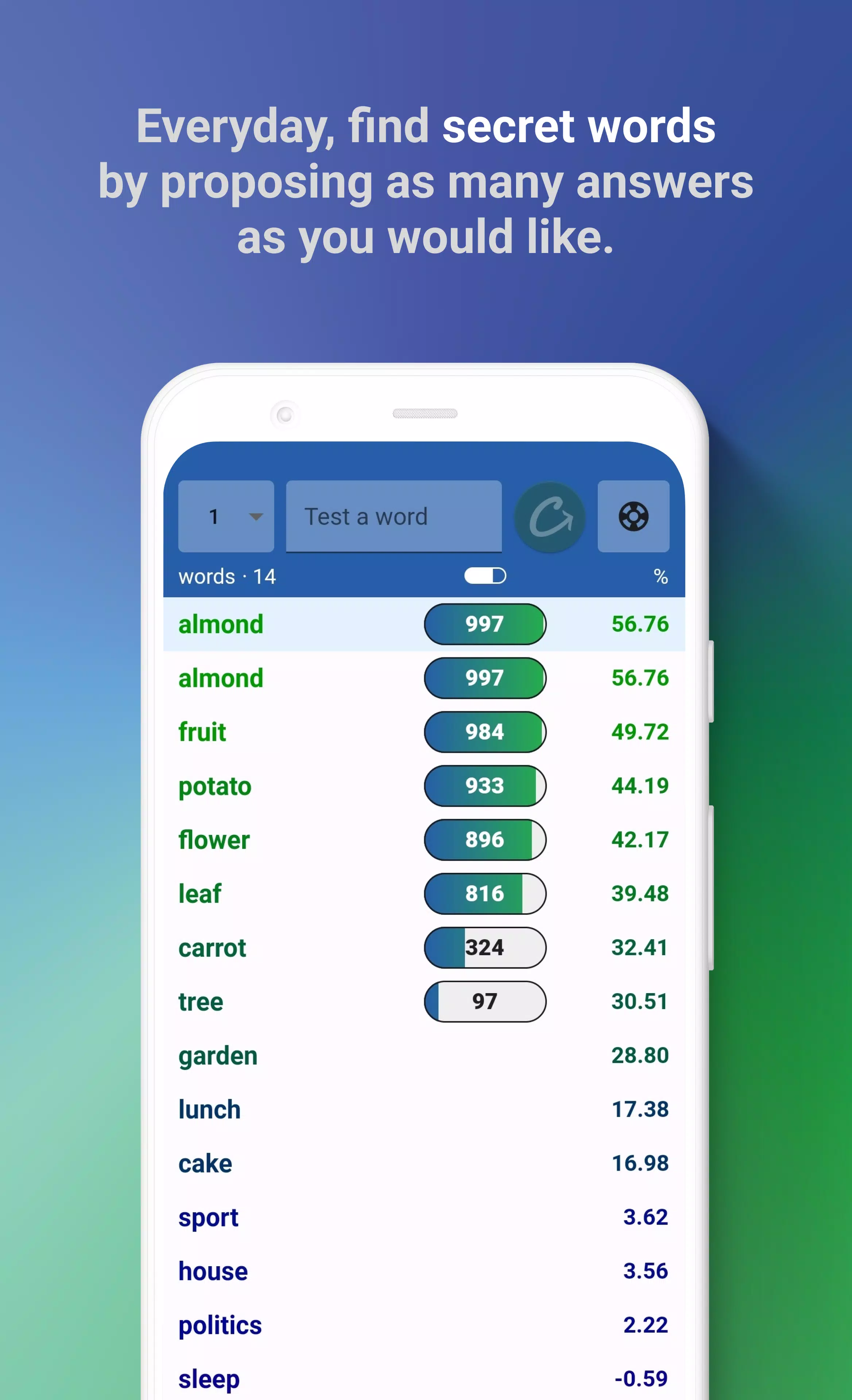
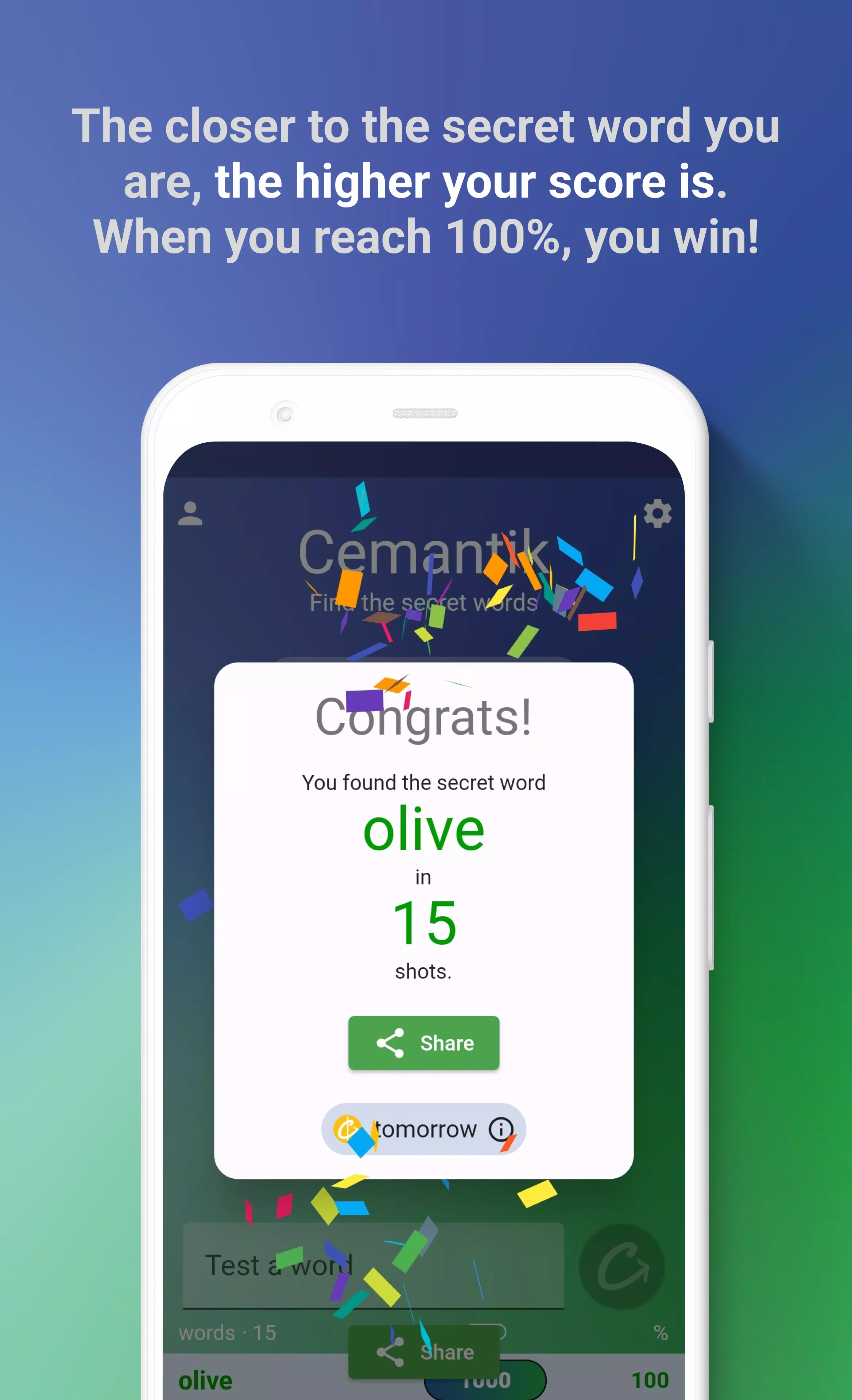
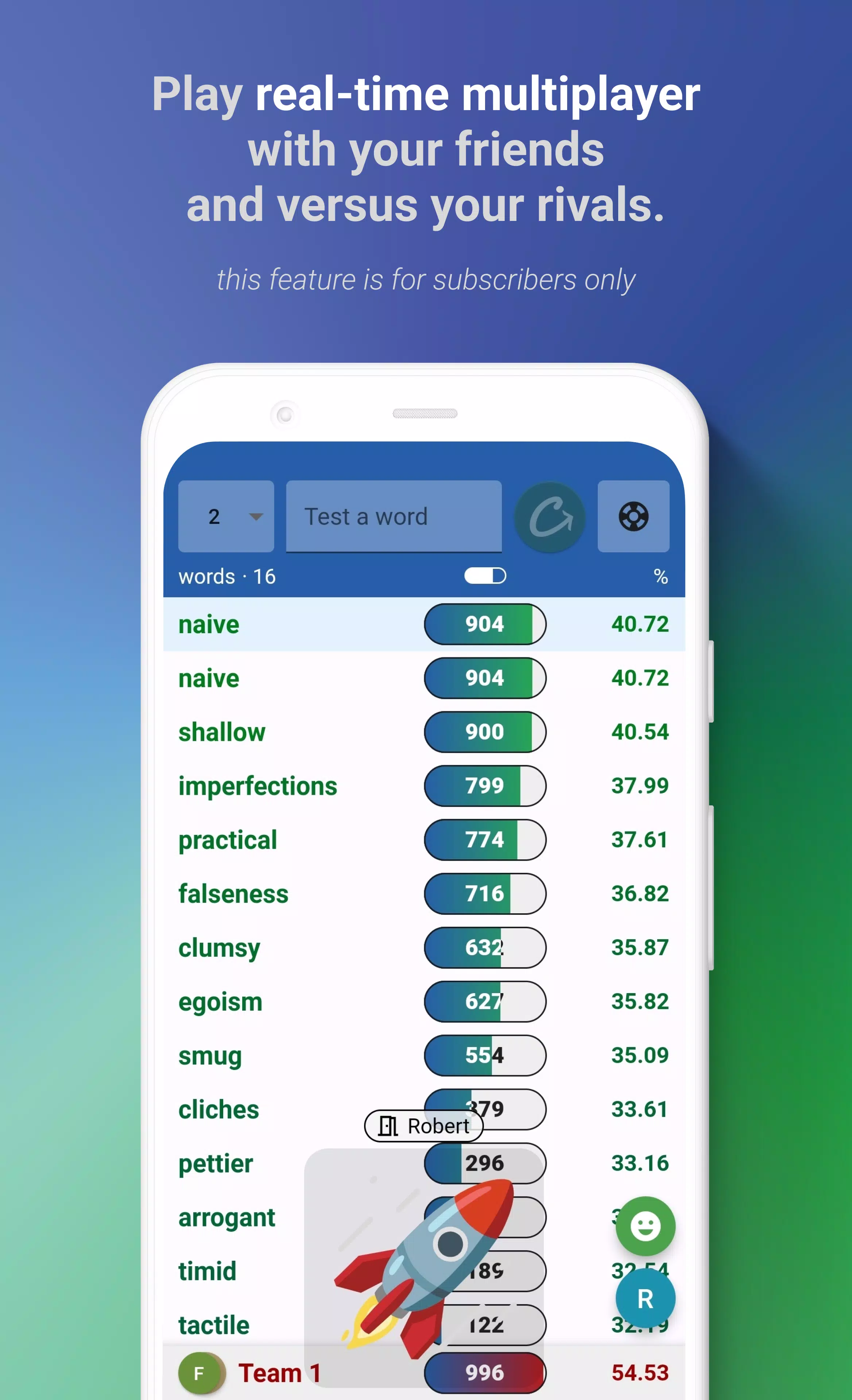
Got it! You're diving into Cemantik, a word-guessing game where the goal is to uncover the secret word(s) by testing your guesses — not based on spelling, but on contextual similarity.
Here’s how to approach it like a pro:
🔍 Step-by-Step Strategy to Crack the Secret Word
-
Start with High-Frequency, Simple Words
Since secret words are often common, singular, and contextually rich, begin with:- man, woman, child, dog, house, tree, water, fire, light, love, time, life, work, hand, face, door, road, day, night
-
Test Words That Share Strong Contextual Clusters
Cemantik scores based on how often a word appears in similar contexts to the secret. For example:- If the secret is key, words like lock, door, house, open, turn, metal, fit might score high.
- If the secret is heart, words like love, soul, beat, feel, break, pump may score well — even pain or hope.
-
Look for Patterns in High Scores
- If fire scores high, maybe the secret is related to heat, burn, flame, or danger.
- If mother scores high, maybe the secret is family, child, childhood, care, love, or home.
-
Use Opposites!
Remember: Cemantik values context, not meaning. So if hot scores high, cold might too — they often appear in similar contexts (e.g., "It was hot in the kitchen, so I turned on the cold air"). -
Try Synonyms and Related Concepts
- For run, try race, sprint, jog, fast, speed, foot, legs, race, chase
- For home, try house, family, roof, bed, sleep, belonging, return
-
Check the Score Trends
- A word like joy might score low, but sorrow might score high — if both relate to emotions.
- Use this to narrow down semantic fields: emotions, body parts, actions, places, abstract ideas.
-
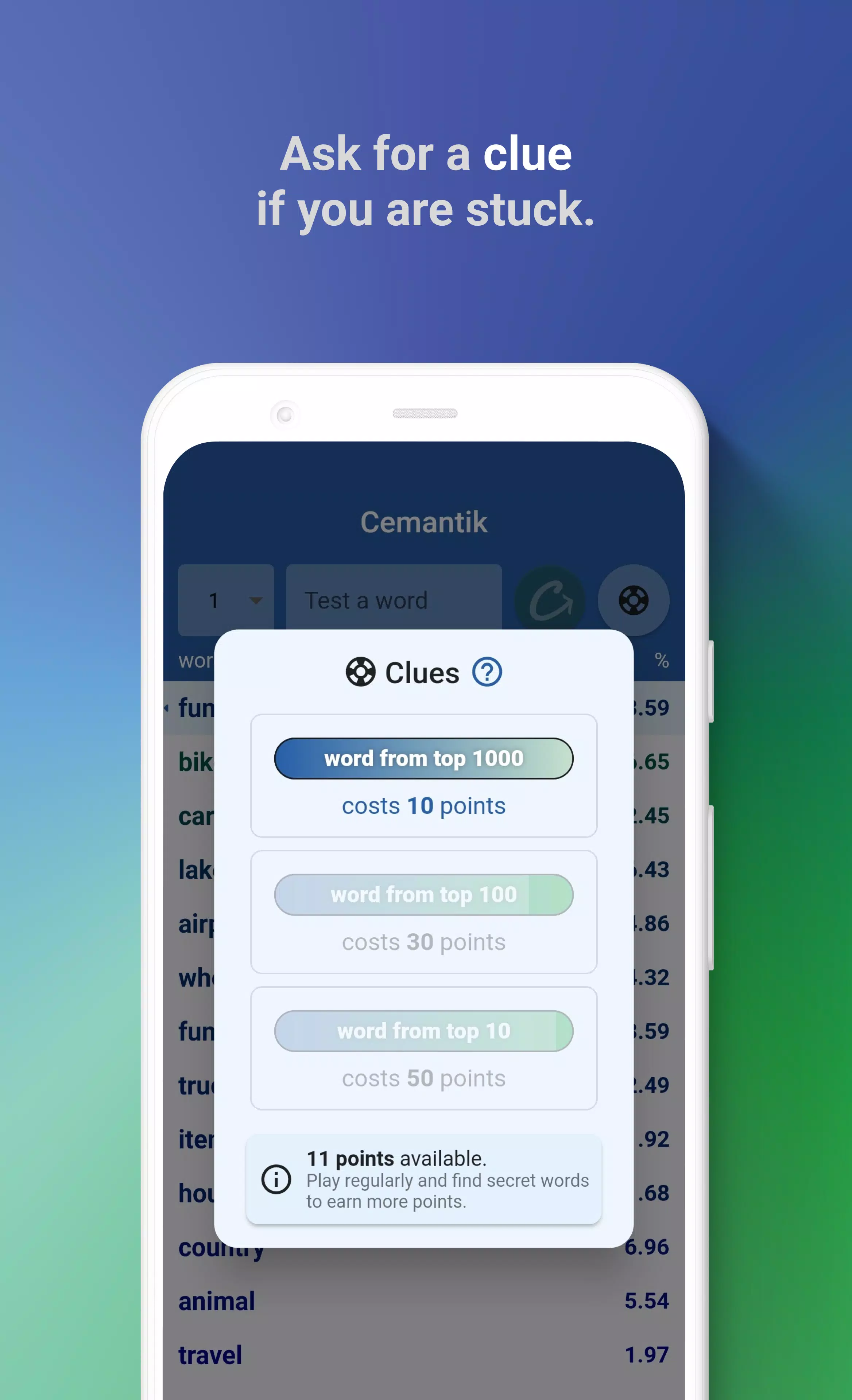
Use Hints (if you have points)
- If you’ve earned points, spend them on hints like:
- "The secret word is a noun."
- "It’s commonly used in everyday conversation."
- "It’s often paired with 'light' or 'dark'."
- If you’ve earned points, spend them on hints like:
-
Team Up in Community Mode?
- Watch what others guess — if many players test light, dark, lamp, night, it might be a night-related secret.
- Be strategic: don’t just copy — use others’ data to spot clusters.
✅ Example: Solving a Secret Word
Let’s say your top 5 guesses and scores are:
- door — 87%
- key — 92%
- lock — 89%
- open — 75%
- house — 70%
💡 Pattern? All relate to access or entry.
✅ Likely secret: key (if not already guessed).
Alternatively: door, lock, house — but key is most central.
Try: turn, fit, metal, unlock — if they score high, you’re close.
🎯 Pro Tips
- Avoid rare or poetic words (e.g., ephemera, quixotic) — they rarely match simple, common secrets.
- Don’t overthink: the secret is often a basic concept like hand, time, face, life, word, mind.
- Check the leaderboard: if thousands solved it in 3 tries, it’s likely a very common word.
📌 Final Advice
🔥 “The secret word is not what you think — it’s what it’s surrounded by.”
Use context, not logic.
Now, go test your first guess — and tell me what scores you’re seeing. I’ll help you crack the secret.
What’s your first word? 🧩




![A Father’s Sins – Going to Hell [Ch. 7 Public] By Pixieblink](https://images.hzyry.com/uploads/67/1719578270667eae9eb6a75.jpg)